
Discover what puzzles do to your child’s brain!
Learn how printable adventure games boost problem-solving, focus, and emotional growth through fun, brain-based play.
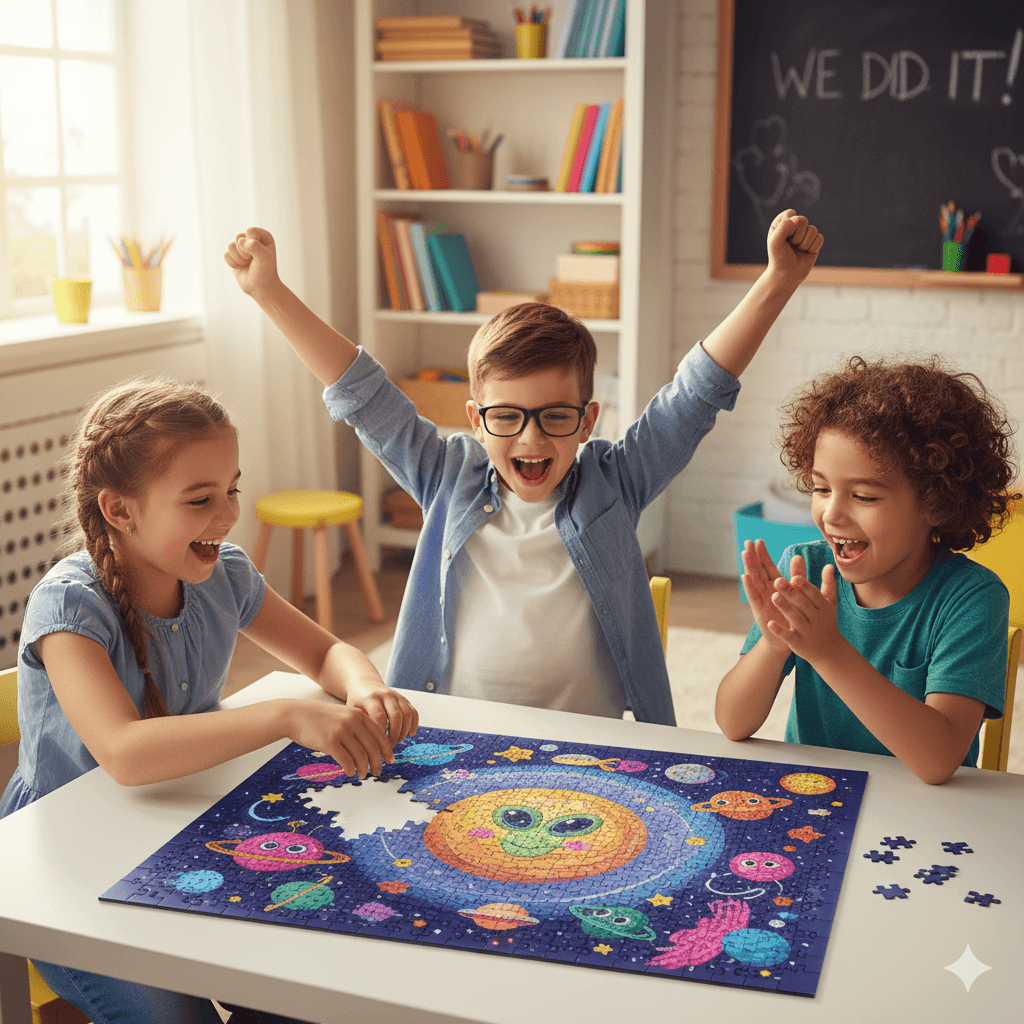
Ever watched your child’s eyes light up when they solve a puzzles? That moment of triumph isn’t just adorable — it’s neuroscience in action. Behind every “I did it!” is a powerful network of neurons growing stronger, faster, and smarter.
Puzzles do more than keep kids busy. They literally shape the brain. When your child plays with story-based or printable adventure puzzles, they’re training vital cognitive skills that support focus, memory, creativity, and emotional regulation — all through play.
The Brain Loves a Good Challenge
In psychology, this is called a “flow state” — when kids are so focused on solving a problem that they forget time. During puzzle play, their brains release dopamine, the feel-good chemical linked to motivation and learning.
Each small success reinforces this reward loop, teaching kids that effort leads to progress. That’s how puzzles quietly build persistence — the mental muscle behind long-term learning success.
Problem-Solving Puzzles: A Brain Workout in Disguise
When children engage with puzzles or adventure games, their prefrontal cortex — the brain’s control center for logic, planning, and decision-making — goes into high gear.
They’re not just matching shapes or spotting clues; they’re analyzing patterns, predicting outcomes, and adjusting strategies. Over time, this strengthens neural pathways that support reasoning and critical thinking — skills that go far beyond playtime.
The Magic of Story-Based Learning
Psychologists know that the brain remembers stories better than isolated facts. That’s why story-based adventure puzzles are so effective. The narrative context helps kids connect emotionally, keeping them engaged and improving memory retention.
In short: when the brain cares about the problem, it works harder to solve it.
Emotional Growth Through Puzzles
Puzzles also teach emotional control. When kids face a tricky challenge, their brains learn to handle frustration, self-correct, and keep going. This builds resilience — the ability to stay calm and problem-solve even when things get tough.
That’s why psychologists often describe puzzles as “safe stress.” They challenge the brain without overwhelming it, teaching emotional balance in a fun, manageable way.
The Printable Advantage
Unlike digital games that overstimulate, printable adventure games for kids activate deeper focus and creativity. They allow children to touch, move, and visualize — engaging multiple senses and both brain hemispheres.
That multisensory engagement enhances learning, comprehension, and fine motor coordination — all crucial for school readiness and long-term success.
The Takeaway for Parents
Every puzzle, every riddle, every “aha!” moment is a step toward a smarter, calmer, more confident child.
So next time your little one is solving a story-based mystery or decoding a printable adventure, remember: they’re not just playing — they’re building a better brain.
Explore our printable adventure games here and join our community of parents who believe in smart fun without screens!