
A Halloween sleepover can move from noisy excitement to “What do we do now?” surprisingly fast. The easiest way to keep the evening moving is to choose one main activity that gives everyone a shared goal, then place two short, flexible activities around it. For children ages 8 to 12, a printable mystery can become the anchor: it feels special, keeps the group together, and does not require the host to build an escape room from scratch.
This plan uses a friendly spooky theme rather than jump scares. It works for a full sleepover, an evening party, or a “sleep-under” where children wear pajamas, enjoy the activities, and go home before bedtime. Adjust the times to your guests and keep an easy opt-out available for any child who wants a quieter role.
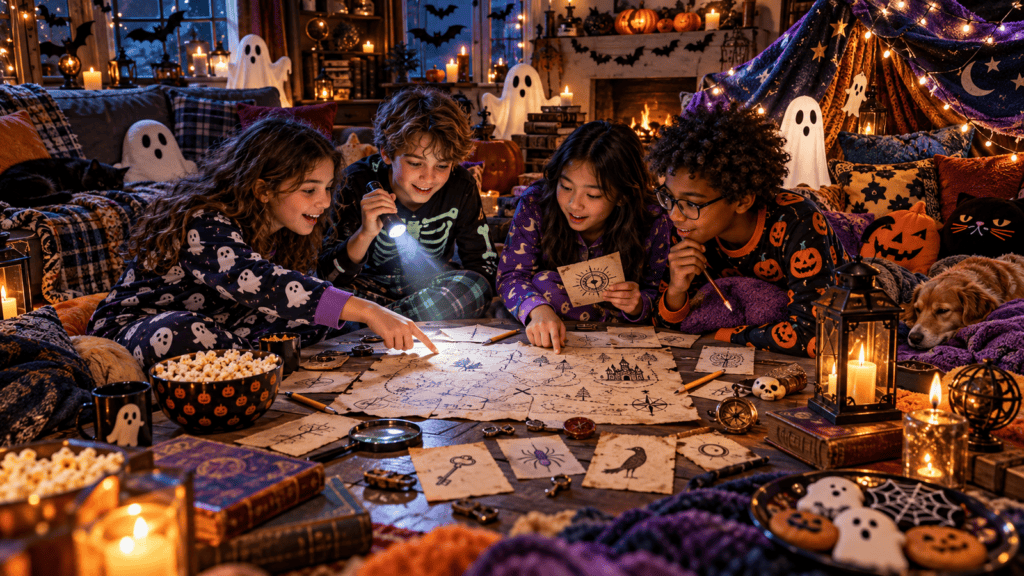
Build the Night Around One Main Mystery
A good sleepover schedule has variety, but it does not need ten unrelated games. Too many transitions create more instructions, more supplies, and more moments when the group drifts apart. Instead, let one connected story do the heavy lifting.
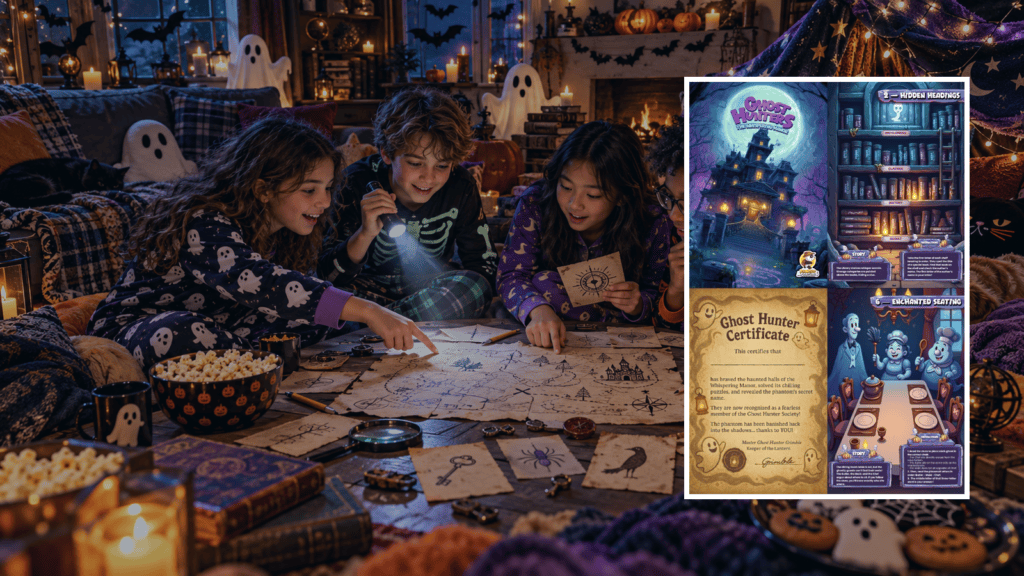
Ghost Hunters: The Whispering Manor is a printable mystery for ages 8–12. Players enter a haunted manor, explore its rooms, solve puzzles, collect letters, and work toward the phantom’s true name. The current product page lists a 19-page PDF, simple setup instructions, an answer sheet, a score sheet, and a Ghost Hunter Certificate. It is designed to play directly from the printer without cutting, gluing, or assembly, with about one hour of gameplay.
That structure makes it useful for a Halloween sleepover: the children know what they are trying to discover, while the adult has clear instructions and solutions available. The game supplies the story; the host only needs to prepare the table and keep the evening comfortable.
A Simple Halloween Sleepover Schedule
The exact clock matters less than the order. Begin with something social, move into the longer mystery while everyone still has energy, and finish with a quieter activity.
5:30–6:00: Arrive, eat, and settle in
Let guests choose a sleeping spot or floor cushion before food. Keep the first half hour loose enough for late arrivals. Pizza, sandwiches, or another familiar meal are easier than a complicated themed menu. Ask parents about allergies in advance and keep drinks away from the printed game pages.
6:00–6:10: Play the Two-Clue Introduction
Give each child a turn to share two clues about a favorite imaginary character without naming the character. The group guesses the answer. For example: “I live in a castle, and I carry a wand.” Keep the clues playful and allow a child to pass or team up with a friend. This warm-up introduces the idea of using evidence without copying any puzzle from the paid game.
6:10–7:10: Enter Whispering Manor
Move to a table or clear floor space where everyone can see the pages. Read the opening together, then let the children lead. One player can read the room text, another can track letters or answers, and another can point out visual details. Rotate those informal roles so the quickest reader or solver does not control the entire game.
Keep the answer sheet with the adult host. If the group stalls, ask a neutral question such as “What does the instruction tell us to compare?” before giving a stronger hint. The aim is to restore momentum, not to make children prove how long they can stay stuck.
7:10–7:30: Snack and movement break
After a seated mystery, offer water, a snack, and a short movement break. Children can stretch, show costumes, or do a two-minute freeze dance. Avoid starting another elaborate competition. The group has already completed the main challenge, so this part can be relaxed.
7:30–7:45: Finish with the Manor Memory Round
Sit in a circle. The first player names one harmless object they might pack for a night in a mysterious manor: a flashlight, warm socks, a notebook, or a snack. The next player repeats the first object and adds another. Continue until someone forgets; then help as a team instead of eliminating the player. Stop while the list is still funny.
After 7:45: Choose a calm ending
For a sleep-under, this is a natural pickup window. For an overnight party, lower the lights safely, set out blankets, and switch to a family-approved film, reading, drawing, or quiet conversation. A clear change of pace makes it easier to move from the mystery to bedtime.
Prepare the Printable Game Before Guests Arrive
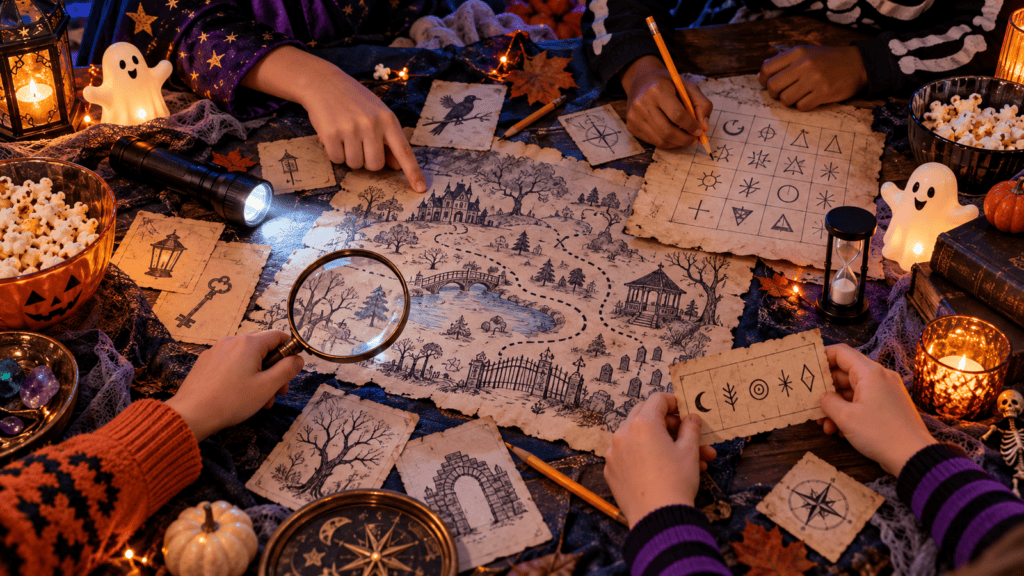
Download and open every file before the party. Identify the instructions, player pages, answer sheet, score sheet, and certificate. Print early enough to correct a paper, ink, or scaling problem. Put pencils and scrap paper at the table, and decide where the host will keep the solutions.
You can add atmosphere with a battery candle, a flashlight, purple or orange napkins, or a small bowl of wrapped treats. None of those extras is required for the game itself. Keep walkways visible, avoid open flames, and do not make the room so dark that children cannot read comfortably.
Make the Mystery Comfortable for Different Guests
Children in the same age range can have very different reactions to spooky stories. Tell guests in advance that the theme is a friendly ghost mystery. Avoid surprise masks, sudden screams, locked doors, or pressure to enter a dark room. A child who does not want to read aloud can be the evidence tracker, page organizer, or theory checker.
If your group includes a less confident reader, pair them with another player and read longer instructions together. If one player keeps answering first, ask everyone to point silently to the clue they think matters before the group discusses it. Small changes can make the activity feel shared without turning it into a lesson.
Use a Sleep-Under When Overnight Is Too Much
A sleep-under keeps the pajamas, sleeping bags, snacks, and evening atmosphere but ends near the children’s usual bedtime. It can work well for a first Halloween gathering, for guests with different overnight comfort levels, or for a host who wants a shorter event.
Invite children for roughly three hours: food and arrivals, the printable mystery, a break, and one calm closing activity. Put the pickup time on the invitation so families know the plan. The children still get a complete themed evening, and no one has to treat staying overnight as a test of bravery.
Keep the Host Plan Short
One familiar meal or snack plan.
One ten-minute clue warm-up.
One printable mystery as the main event.
One movement break.
One quiet closing activity.
A visible pickup or bedtime plan.
This is enough for a Halloween night that feels planned without becoming exhausting. The details children remember are usually the shared theories, the moment a clue makes sense, and the laughter around the table—not the number of decorations.
Ready to Plan the Mystery Night?
Explore Ghost Hunters: The Whispering Manor if your group wants a connected printable adventure. For more ways to plan the evening, read Halloween Party Games for Kids Ages 8 to 12 in Small Groups, Halloween Puzzle Night for Kids, or Screen-Free Family Game Night Ideas. If your family prefers a different story world, browse all printable puzzle games for kids ages 8–12.